
At the outset, we should be clear about our position.
We do not support the use of animals in dog shows or entertainment. And in a world where shelters are forced to euthanise thousands of healthy dogs every day simply because there are not enough homes, we do not believe any breeding can truly be described as “responsible.”
But Crufts raises a broader issue that deserves serious discussion: the role of kennel-club breed standards in shaping the health of dogs.
Dog shows judge animals against written breed standards. Over time, those standards influence which dogs are bred and which traits are rewarded. When appearance becomes the benchmark, selection inevitably moves toward exaggeration — flatter faces, longer backs, heavier skin folds, drooping eyelids and other features that can compromise health.
Across many breeds today, the consequences are well documented:
dogs that struggle to breathe, dogs with chronic joint and spinal problems, dogs prone to eye disease, skin infections, and inherited disorders.
These outcomes are not accidents. They are the predictable result of breeding toward aesthetic ideals rather than functional health.
Recent conversations following Crufts have once again highlighted this tension. Questions were raised when a top-placing dog appeared to show signs consistent with ectropion, a condition where the eyelids roll outward, exposing the eye to irritation and infection. At the same time, videos circulating from the show raised concerns about handling practices in the ring.
While kennel clubs often point to initiatives such as Breed Watch and veterinary checks as evidence of progress, these measures do not address the underlying structure of the system.
The deeper question remains:
Are dogs being rewarded for genuine health and functional bodies — or for how closely they match a written aesthetic standard?
Are judges prioritising how well a dog’s body actually works,
or how closely it resembles an idealised image of the breed?
Are breed standards protecting dogs from inherited suffering,
or normalising traits that increase the risk of chronic health problems?
And most importantly:
Are the traits rewarded in the show ring improving the health of future generations of dogs — or quietly reinforcing the very problems the dog world claims it is trying to fix?
These are uncomfortable questions, but they are necessary ones.
Because history has shown that when appearance becomes the primary selection pressure, exaggeration follows. And when exaggeration follows, welfare often suffers.
For decades, kennel clubs have promised reform. Yet many of the same structural health problems persist across numerous pedigree breeds.
If the goal is truly to protect dogs, the conversation cannot stop at better judging guidelines or minor adjustments to standards. It must confront a harder reality:
A system built around appearance will always struggle to prioritise health.
#StopTheCycle #BreedingKills #LifeOverLitter #PrisonersOfProfit #Crufts #DogShows
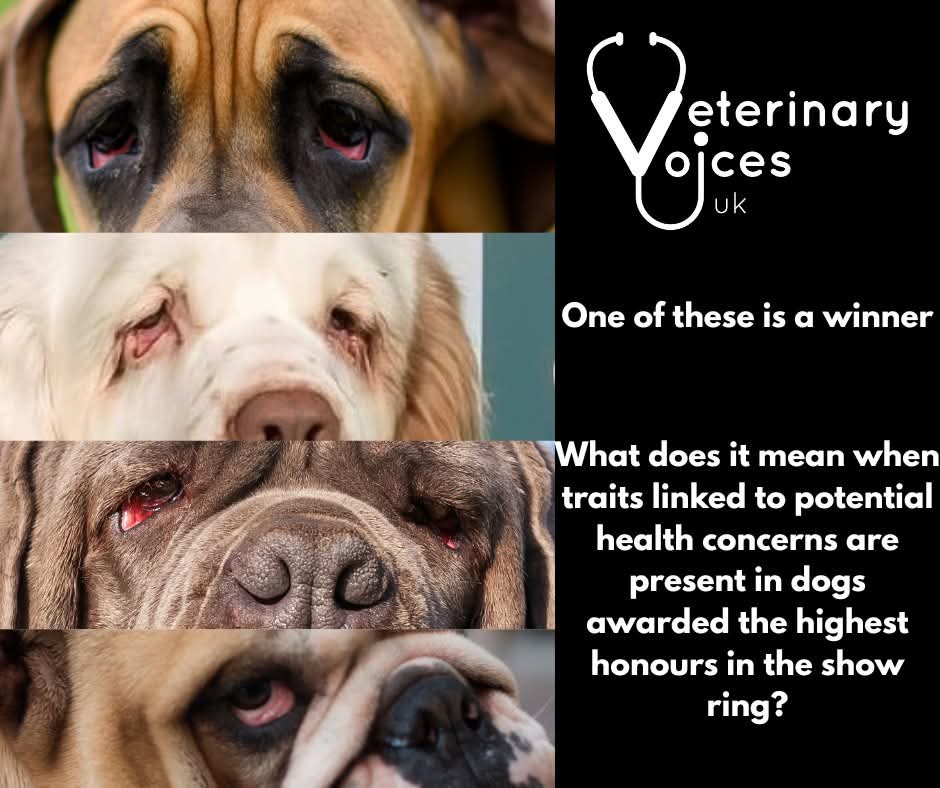
Image from Veterinary Voices UK
Comments